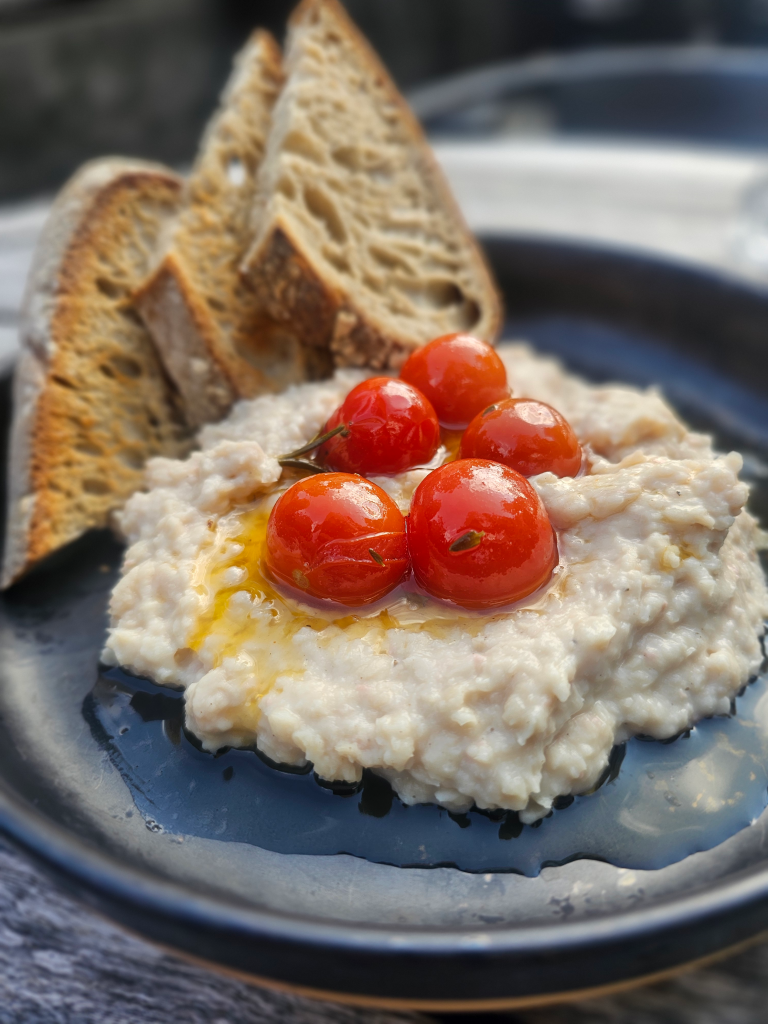
As the title suggests, I am a foodie. I love experimenting in the kitchen and I love eating out, either alone or with friends. Now, I really love taking simple dishes – sausage and mash, fish and chips, pie, pasta, bread, curries and more – and elevating them so they become extra special. That brings me joy.
Despite all this, I hate food writing and I particularly hate the current trend in restaurant reviews. It has become an art of transforming a humble meal into a verbose, flowery novel and I am not here for it. The words that are so often peddled in food writing to describe a humble plate of food belong in a Shakespearean novel more so than they do on a blog, or worse, a TikTok reel (is that the right terminology?!). So, come with me and explore all the reasons why I hate food writing and what I plan to do about it.
1. Pretentious adjectives:
The rule should be if you can’t use the words “succulent”, “delectable” or, worst of all, “unctuous” in normal conversation without rolling your eyes – or have someone else roll their eyes – then it doesn’t belong in food writing. Describing any plate of food using this terminology seems to me to be excessive and almost disingenuous. Let’s call it what it is: a cheeseburger is juicy, cheesy goodness. Nothing else.
2. The Mouthfeel Obsession
Food writers love to go in-depth with how food feels in your mouth. Perhaps it is my autism but this makes me feel deeply uncomfortable, as I can literally imagine the food swilling around inside your gob. Now, texture is very important but just say exactly that – it’s crunchy, creamy, chewy. This pseudo-scientific term needs to be put in the bin.
3. The Quest for Authenticity
Food writers across the globe are on a desperate search for the original version of a specific dish. When doing so, they often tend to equate authenticity with a lower socio-economic background. The secret here is that authenticity is really a bit of a lie. Shall we take Italy as an example? One region may believe their dish is more authentic than another region’s dish. Indeed, one family might believe that their ragu is more authentic than the troublesome neighbour’s ragu down the street. Food is beautifully subjective and lets search for ingredients, herbs and spices that go well with each other rather than desperately trying to hunt down recipe zero.
4. The Narrative Overload
I must admit, I hate this one. It happens in food blogs, recipe books and restaurant reviews. When reading food writing, I am normally there because I want their opinion on the food, and perhaps the service. I don’t care for the back story. I don’t care if the aroma of rosemary and garlic transported you to your childhood or the reason you love Tonkotsu is because of your recent trip to Japan. Make food the main show and cut out all of the self-indulgent faff.
5. The Unattainable Experience: Not every restaurant is great
This has become a particular problem with the rise of the online influencer. Not every dish or meal is mouthwatering and brilliant. Not every restaurant is good. Service can be bad sometimes and it is okay to pay money and not to have enjoyed yourself. Nowadays, however, influencers parading as food connoisseurs go to restaurants and make out that every dish is brilliant, it was value for money, they would go again, they had an amazing time and even the cocktails were worth £25 a pop. The reason I think people do this is to cultivate a sense of superiority, a sense that they’re living the best life and those who aren’t are missing out. Unfortunately, that is not true. It is okay to have a bad meal sometimes.
6. The Lengthy Prose
Lastly, some reviews and blog post are just two long. By the time I get to the bottom of the review, I forget what food they had eaten and whether it was any good. Get to the point and tell us if it was any good and whether you would recommend or not.
So, what now?
My aim is to try and change this. I love eating out and my aim is to write short and snappy reviews and post them here: no more than 5 minutes a piece. They will include details and photographs of the food, service, drinks, atmosphere, overall price, and finally a score and a recommendation. My first food blog will be reviewing Mildred’s – yes, it’s a chain but let’s start small.
Ultimately, food writing should be informative but also make us hungry and want to try new things. Let’s bring food writing back to basics: clear, concise and honest. Let’s make it about the food and not the writer’s ability to pen a literary masterpiece.
 Matthew Martin
Leave a reply to Simple food review: Mildred’s – Matthew Martin Cancel reply